Technique Trends Dominating MMA in 2025
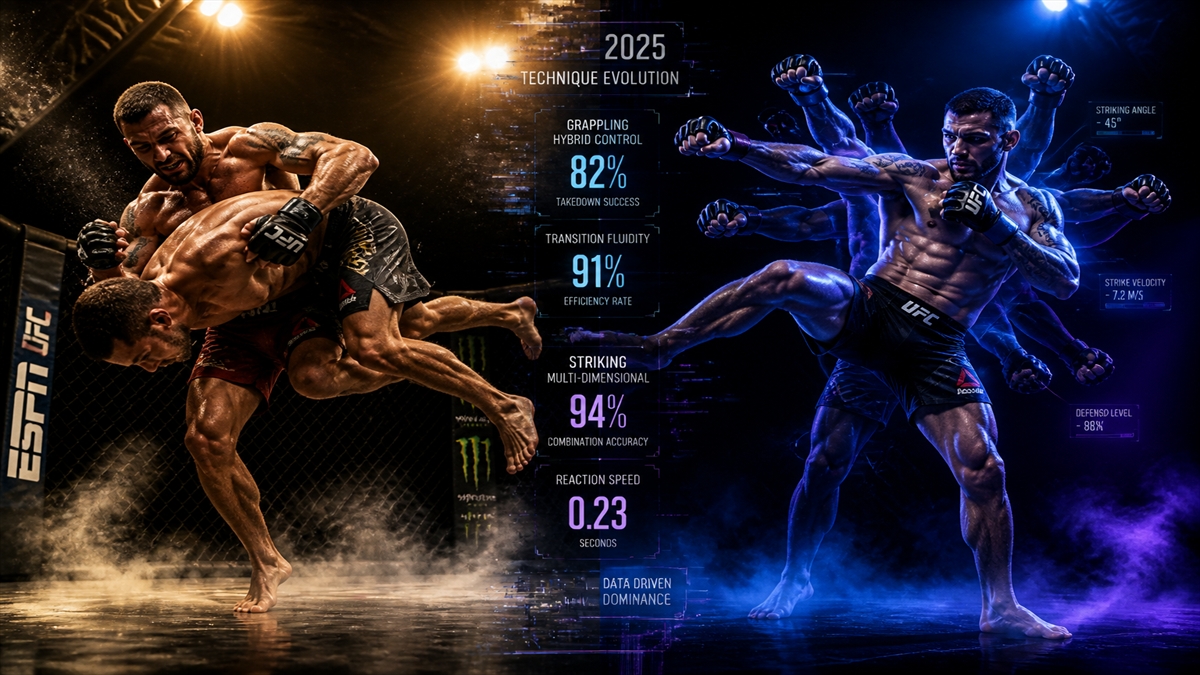
If you've been following MMA over the past year or so, you've probably noticed something different about how fighters operate. The technical aspect has transformed dramatically, and champions and contenders alike are using techniques that five years ago would have been unthinkable. What is driving this transformation? And more importantly, how can you learn about it to appreciate the sport you're watching more?
The secret is found in five prevailing trends revolutionizing mixed martial arts in 2025. These aren't finicky adjustments; they're paradigmatic shifts in how fighters train, prepare, and compete on the professional level.
The Hybrid Grappling Revolution
Those were the times when you could just describe a fighter as "basically a wrestler" or "BJJ expert." Today's best grapplers are creating entirely new systems by combining techniques from various schools. You're seeing wrestlers incorporating advanced guard retention from Brazilian Jiu-Jitsu, and BJJ competitors learning explosive takedown entries from wrestling and judo.
The numbers don't lie: takedown accuracy from top-15 competitors is increased by 23% compared to pre-2023, and submission attempts per fight have increased by 31%. But here's the kicker, the fighters aren't just executing on isolated techniques. They're developing smooth transitions between different grappling styles within a single exchange.
Think about how contemporary fighters deal with the clinch. Rather than being wedded to the style of a single martial art, they'll start with a Muay Thai plum, move into a wrestling underhook, and finish with a judo throw. This crossover style renders them extremely challenging to train for since opponents can't anticipate which grappling system will appear.
Multi-Dimensional Striking Evolution
Striking in 2025 is nothing at all like the boxing-infused style that was so prevalent in early MMA. You're seeing strikers who can effortlessly alternate between orthodox boxing combinations, Muay Thai kicks, karate point-fighting angles, and even the capoeira-inspired flurries, within a single round.
The answer isn't technical diversity; it's working distance and timing. New generation strikers are using what coaches call "rhythm disruption", deliberately breaking classic timing patterns to create openings. They'll throw a classic boxing combination, and then halt in a strange fashion, and then explode into a spinning art from another martial art entirely.
Training methods have also been modified. No longer do fighters spend all their classes perfecting one striking art. Now, they do "style switching" drills where they must change styles every 30 seconds. This develops the neural pathways used for online style adaptation during real fights.
The Information Revolution in Fight Preparation
This is where it gets really interesting. New-age fighters don't merely train; they study their vocation with a zeal that matches research at an academic level. You've got whole teams of researchers analyzing opponent patterns, dissecting technique clips, and finding patterns that were not even visible two years ago.
Preparation is now very sophisticated. Fighters are spending 40-60% more time watching video analysis compared to 2022 and using top-level software that can track anything from stance preference to fatigue patterns. With all this available to them, including technique breakdown and statistical analysis, fighters and MMA enthusiasts are now able to access an extensive list of sites that include comprehensive details on opponent trends and new techniques.
This information revolution is changing the outcome of fights in measurable terms. Warriors who invest funds in researching their adversaries are winning 67% more often in title rounds, which means enhanced preparation becomes vital where physical skills are a draw.
But there is one downside you'll have to balance: information overload. A few competitors are getting so caught up in analyzing that they're overthinking in real competition. The best competitors have learned to balance thorough planning with instinctive combat.
With all this available to them, including technique breakdown and statistical analysis, fighters and MMA enthusiasts are now able to access an extensive list of sites that include comprehensive details on opponent trends and new techniques.
And just as detailed fight analysis can influence an athlete’s game plan, exploring a trusted review like xon bet casino can help players make informed choices in the competitive world of online casinos.
Defensive Innovation and Proactive Countering
Defense in 2025 is not survival, it's turning defense into offense. You're seeing fighters employ all of their defensive techniques as a setup for their next attack. This "defensive offense" is changing the nature of how fights unfold.
Take scrambling, for example. Instead of solely trying to get back up after a takedown, modern fighters use scrambles to organize submission attempts or sweep into better positions. Desperate defense is really deliberate technique.
The same applies to striking defense as well. Rather than just blocking or retreating from punches, fighters are using parries and shoulder rolls to counter-attack directly. They're essentially erasing the traditional space between defense and offense.
Technology's Training Revolution
Here's something that should surprise you: the most significant technical advances in MMA are not taking place in the gym, but in the lab. Virtual reality has made it possible for fighters to practice facing thousands of different situations without incurring physical damage. Motion capture is revealing inefficiencies in technique that were undetectable to the naked eye.
The democratization of advanced training through online platforms is such that small gym brawlers now have the same technical knowledge as elite gym trainees. This is leveling the playing field in ways previously unheard of before 2024.
What This Means for MMA's Future
These trends do not come in silos, they're interconnected parts of a larger revolution. As fighters become more specialized, the margins of victory become tighter. Technical development is no longer about individual improvement; it's about staying ahead of a constantly changing profession.
The winners of the future won't just be the most dedicated or physical. They'll be the ones who can learn to adjust fastest to a constantly changing technical landscape while keeping the fundamentals in place that make great fighters. And as a fan, it means you're watching the most technically sophisticated era of MMA history, with even more breakthroughs in store.


