Three Fighters, Three Preventable Disasters: Why MMA's Safety Net Has Catastrophic Holes
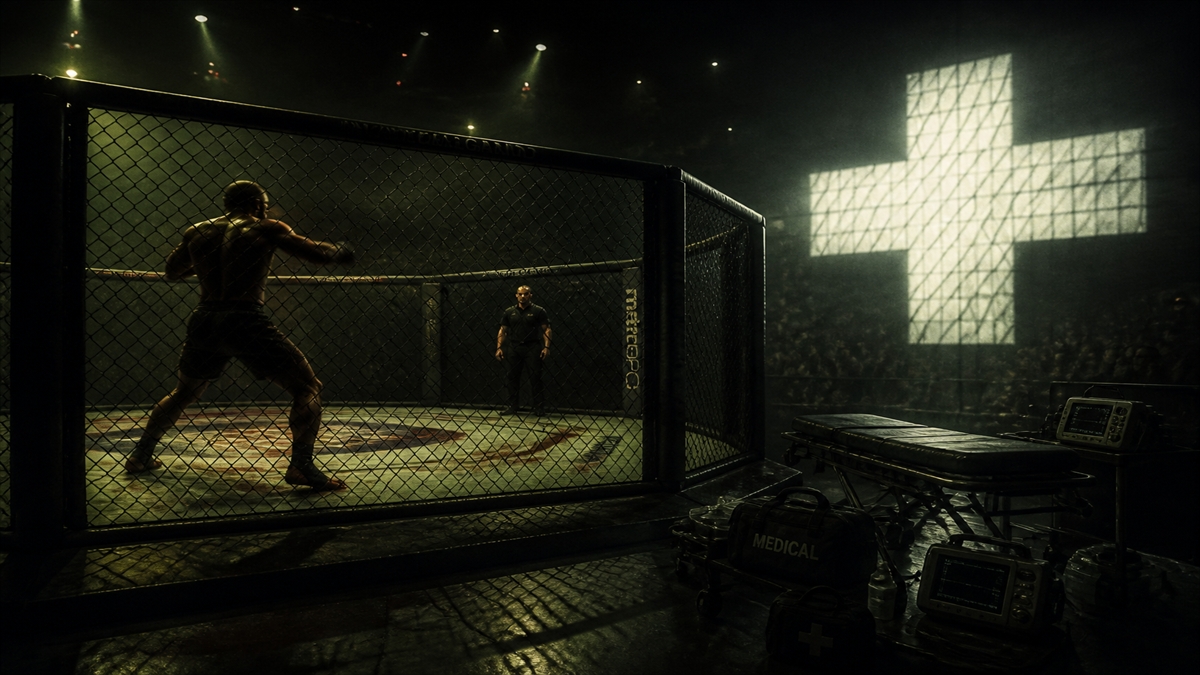
When Fighting Blind Becomes Standard Protocol
Charles Jourdain spent the final ninety seconds of his UFC 331 bout against Kron Gracie functionally blind in one eye. Not blurred vision. Not temporary discomfort. Complete vision loss from a detached retina—a career-threatening injury that would send most people to an emergency room, not into another round of cage combat. The Quebec fighter threw strikes, defended takedowns, and heard the final horn before anyone with medical authority stepped between him and permanent damage.
This wasn't an anomaly. It's protocol.
Mixed martial arts operates under a safety framework that looks increasingly archaic when you examine what actually happens when fighters sustain catastrophic injuries mid-contest. While boxing doctors conduct mandatory examinations between every round, MMA physicians function primarily as spectators until someone's unconscious or a referee waves them in. The contrast isn't just philosophical—it's producing a measurable pattern of preventable escalation.
Three Case Studies in System Failure
Charles Jourdain: The Man Who Fought Blind
Jourdain's retinal detachment occurred during the second round. He immediately recognized the symptoms—complete darkness in his right eye, the kind of sudden blackness that signals serious structural damage. In any rational safety system, this triggers an immediate stoppage. In MMA's current framework, it triggers nothing unless the fighter verbally quits or can't defend himself.
The detached retina continued tearing through ninety more seconds of combat. Every punch absorbed potentially worsened the damage. Every head movement risked expanding the separation. Post-fight surgical intervention saved his vision, but the question haunts the tape: what if Gracie had landed clean in those final exchanges? What if the detachment had expanded beyond surgical repair?
Dakota Ditcheva: Fighting on Fractured Foundations
At PFL Europe, Dakota Ditcheva broke her right hand in the opening round against Valentina Scatizzi. Then she broke her left hand. Then she continued fighting for three more rounds, throwing diminished strikes with bilateral fractures while cage-side physicians watched without intervention. She won a decision, celebrated briefly, then spent months in surgical recovery.
Broken hands represent different math than detached retinas—the immediate danger targets career longevity rather than permanent disability. But the systemic question remains identical: if a ringside physician can observe a fighter's hands swelling to twice their normal size between rounds, why does protocol prohibit examination until after the final bell?
Islam Makhachev: Dislocated and Dominant
Islam Makhachev dislocated his shoulder during his title defense against Dustin Poirier. The lightweight champion briefly left the cage holding his arm at an unnatural angle, received corner assistance to pop the joint back into socket, then returned to dominate the remainder of the fight. Makhachev's victory was impressive. The medical oversight was nonexistent.
Shoulder dislocations carry their own catastrophic risk profile—nerve damage, vascular complications, recurrent instability that can end careers. Once a shoulder dislocates mid-fight, every subsequent grappling exchange risks re-dislocation with compounding damage. Yet commission physicians never entered the cage to assess joint stability, nerve function, or whether continuing posed unreasonable risk.
The Boxing Comparison That MMA Hates
Boxing's between-round medical protocol annoys MMA purists who consider it overprotective theater. But the data tells different stories. Boxing physicians examine fighters after every round, checking pupil response, cognitive function, swelling progression, and structural integrity. They have authority to stop contests based on developing injuries rather than waiting for catastrophic failure.
This isn't speculation about hypothetical safety improvements. It's documented reduction in severe injuries and long-term neurological damage. When doctors catch orbital fractures early, fighters avoid the compounding damage of absorbing power punches to already-compromised bone structure. When they identify balance issues between rounds, they prevent fighters from continuing through concussions that MMA lets accumulate until someone face-plants.
The philosophical argument against importing boxing's protocols usually centers on flow—MMA's one-minute breaks supposedly can't accommodate medical examinations without destroying pacing. But this argument collapses under basic arithmetic. Boxing doctors complete thorough assessments in sixty seconds. MMA fighters already spend those sixty seconds receiving corner treatment, having vaseline applied, and listening to advice. Adding a ten-second physician check wouldn't disrupt anything except the fiction that corners always prioritize fighter safety over winning.
What Other Combat Sports Already Figured Out
Muay Thai in Thailand operates under progressive intervention protocols that shame MMA's passive observation. Stadium physicians monitor swelling progression, examine cuts between rounds, and possess clear authority to stop fights when injuries escalate beyond acceptable risk. The sport hasn't suffered from this oversight—it's prevented countless escalations from manageable damage to permanent disability.
Even in high-stakes championship Muay Thai, where financial incentives mirror MMA's biggest cards, doctors intervene when fighters show signs of serious injury. The culture accepts this as basic professionalism rather than unwelcome interference. Fighters respect doctors who prevent them from making career-ending decisions in the heat of competition.
Kickboxing under Glory and ONE Championship rules incorporates similar protocols. Between-round checks don't eliminate all injury risk—combat sports will never achieve that—but they create accountability mechanisms that currently don't exist in MMA. When doctors must physically examine fighters rather than observe from distance, they catch developing crises before they become catastrophes.
The Real Reason MMA Resists Reform
Follow the incentive structures. Between-round medical examinations create more technical stoppages. Technical stoppages mean fewer explosive finishes. Fewer finishes potentially mean lower highlight-reel value and reduced social media virality. When your sport's marketing engine runs on knockout compilations, systematic safety improvements that reduce knockout rates face institutional resistance.
This explains why obvious reforms never gain traction despite repeated high-profile injury cases. It's not that athletic commissions don't understand the problem—it's that solving the problem conflicts with promotional interests that fund commission operations through sanctioning fees. The financial feedback loop incentivizes maintaining status quo even when fighters compete through conditions that would terminate any other sporting event.
Consider also how betting markets create pressure against mid-fight stoppages. Live wagering has exploded across combat sports, with platforms offering odds adjustments between rounds and during action. Technical stoppages for medical examination could theoretically disrupt these markets, though this concern vastly overstates betting industry fragility. Sports like tennis handle medical timeouts without destroying wagering integrity, yet MMA treats between-round checks as existential threats to its business model.
What Actual Reform Would Look Like
Dr. Nitin Sethi, a neurologist who's consulted for multiple boxing commissions, outlined practical MMA reforms in a 2023 interview: mandatory physician examination after any round where a fighter shows visible injury, takes significant head trauma, or demonstrates altered movement patterns. These checks wouldn't extend breaks—they'd happen during existing rest periods while corners work. Physicians would have authority to stop contests or mandate additional monitoring without requiring referee involvement.
The Association of Ringside Physicians has proposed similar frameworks specifically for MMA, emphasizing that between-round checks protect fighters without destroying sport integrity. Their model includes:
- Standardized neurological quick-checks after rounds with multiple knockdowns
- Mandatory hand and foot examination when fighters show visible structural damage
- Eye examinations after any strike that causes immediate swelling or vision complaints
- Authority for physicians to mandate additional rest or protective equipment between rounds
None of these proposals would have prevented Jourdain from entering the cage. But all of them would have caught his retinal detachment between rounds two and three, stopped the fight before additional damage occurred, and preserved his vision without requiring him to verbally quit.
The Commission Accountability Gap
State athletic commissions theoretically regulate fighter safety, but their actual authority over cage-side medical decisions remains deliberately vague. Most jurisdictions give physicians advisory rather than mandatory roles—they can recommend stoppages but can't override referee judgment or force examinations against corner objections.
This creates absurd situations where doctors watch fighters sustain obvious injuries, recognize the need for examination, but lack procedural authority to conduct assessments without referee permission. By the time referees notice problems serious enough to wave in doctors, injuries have usually progressed beyond early intervention benefits.
Contrast this with athletic commission authority over other safety aspects. Commissions mandate specific glove weights, cage dimensions, and pre-fight medical screening. They suspend fighters who fail drug tests or miss weight. But when it comes to mid-fight medical intervention—the moment when their expertise matters most—they've structured themselves into passive observer roles.
Why Fighters Won't Save Themselves
The common response to these safety failures blames fighter choice: if Jourdain wanted to quit, he could have told the referee. If Ditcheva wanted her hands examined, she could have asked between rounds. This argument ignores everything we know about combat sports psychology and competitive pressure.
Fighters are systematically conditioned to ignore injury signals, continue through pain that would hospitalize normal humans, and interpret self-preservation instincts as weakness. This conditioning serves important purposes—you can't compete effectively in MMA while maintaining normal threat-response systems. But it also guarantees that fighters will make objectively terrible medical decisions when left to self-assess mid-competition.
Corner teams face similar conflicts of interest. They want to protect their fighters, but they also want to win fights, preserve win bonuses, and maintain reputations as corners who don't throw in towels. When Jourdain told his corner about vision loss between rounds, they faced an impossible choice: stop a winnable fight based on an injury they couldn't personally verify, or trust their fighter to survive ninety more seconds. The system shouldn't place that decision entirely on corner judgment.
The Path Forward Requires Uncomfortable Changes
Implementing meaningful safety reforms means accepting trade-offs that MMA's promotional machinery currently rejects. Some fights will end earlier than they otherwise would. Some comeback victories won't happen because doctors stop fights that referees would have let continue. The sport's aesthetic will shift slightly toward technical decisions and away from warriors-competing-through-injuries narratives that currently dominate highlight packages.
These changes won't make MMA boring or soft—boxing maintained its appeal through a century of progressive safety improvements. They will make the sport more sustainable for athletes who currently choose between career longevity and competitive success. Right now, those goals often conflict. Better medical protocols could align them.
The alternative to proactive reform is reactive regulation after an inevitable catastrophe. Eventually, a fighter will suffer permanent disability or death from an injury that developed over multiple rounds while cage-side physicians watched without authority to intervene. The resulting investigation will expose systematic negligence, trigger heavy-handed regulatory responses, and potentially threaten the sport's legal status in key jurisdictions.
Conclusion: Safety Doesn't Destroy Sport, Preventable Disasters Do
Charles Jourdain returned to competition six months after emergency retinal surgery, his vision saved by surgical intervention that happened hours too late. Dakota Ditcheva spent four months recovering from bilateral hand fractures that required two separate operations. Islam Makhachev won his fight but needed months of shoulder rehabilitation for an injury that could have been assessed and managed between rounds.
These outcomes represent success stories only because worse disasters didn't occur. The current system relies on luck—luck that detached retinas don't expand beyond surgical repair, that broken hands don't suffer catastrophic fractures, that dislocated shoulders don't cause permanent nerve damage. Eventually that luck runs out.
MMA doesn't need to choose between exciting fights and fighter safety. It needs to stop pretending that choice exists. Between-round medical examinations work in every other major combat sport without destroying competitive integrity. The real question isn't whether MMA can implement similar protocols. It's whether the sport will act proactively or wait until preventable tragedy forces uncomfortable reforms nobody wanted.


