Ode Osbourne Wouldn't Tap, and His Spine Nearly Paid the Bill
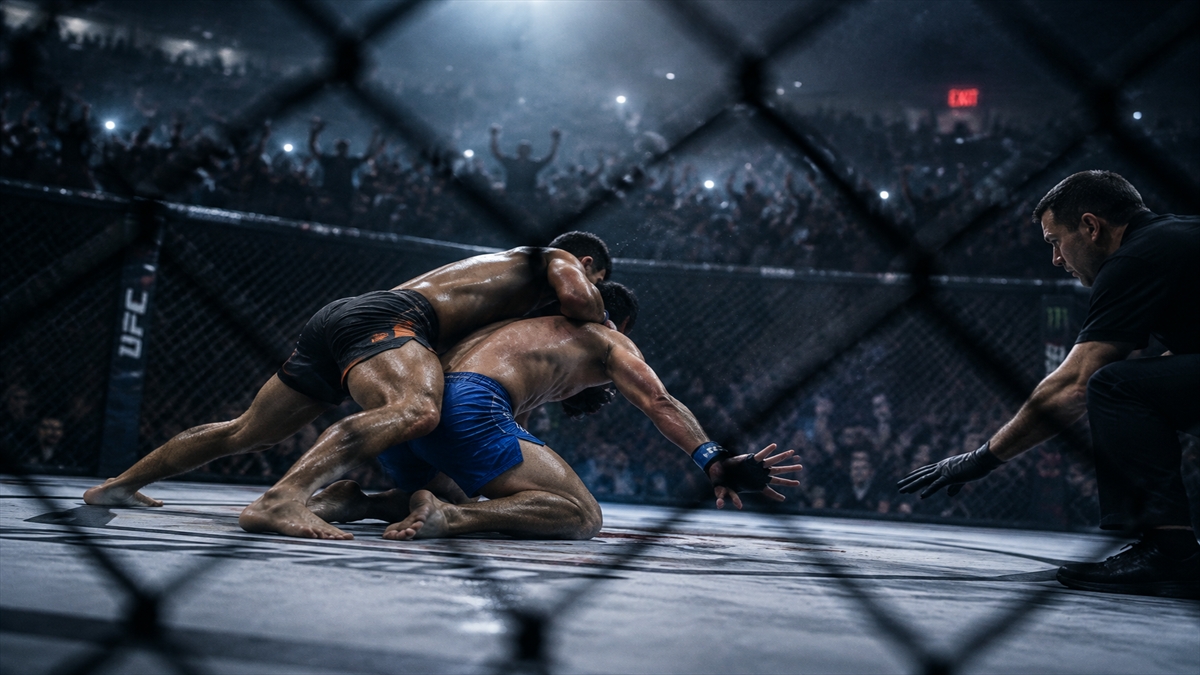
Watch the moment on a loop and your own back starts to ache. Ode Osbourne is trapped, Cody Durden is cranking, and Osbourne's spine is bending in a direction spines are not built to go. The easy move is a quick tap, two slaps on the mat and a walk back to the corner. Osbourne didn't take it. He chose damage over defeat.
That choice is why people are still talking about the fight. It's also why it deserves more than a highlight-reel caption.
The Moment His Back Was Bending
Durden did what good grapplers do. He took the exchange where Osbourne didn't want it to go, got control of the body, and locked onto a hold that attacked the back instead of a limb. Once he had the hold, he didn't have to hurry. He had time to tighten it and Osbourne had nowhere to go.
The crowd noise changed. When a fighter is choked, people can see the end coming. When a fighter's spine is being folded, nobody knows what the end will look like, and that uncertainty is what made the moment so uncomfortable to watch.
Why This Kind of Submission Is So Dangerous
Most submissions give you a warning. A choke cuts blood flow, and you feel it and tap before you go out. An armbar or kneebar hyperextends a joint, and the pain tells you to quit before the ligament goes. Spinal locks and back-bending positions work differently.
- Less warning: The spine can take a lot of load before it screams, so pain may show up after the damage is done.
- More at stake: A torn knee ligament ends a season. Damaged vertebrae, discs, or the nerves running through them can change how a person lives.
- Leverage works against you: Once the hips and shoulders are pinned, the spine becomes the only thing that can give. Fighting the hold by arching harder only adds to the stress on it.
Think of it like a card player pushing in with a bad hand because folding feels like losing face. The pot looks big, but the real stake is something you can't win back.
Osbourne's Own Explanation
Osbourne's explanation afterward wasn't complicated. Tapping felt like quitting, and quitting wasn't in his plan. To him the fight wasn't only about the result on the card. It was about who he is when things go wrong. Fighters talk like this all the time, but it carries more weight when the person saying it nearly paid for it with his spine.
His mindset isn't foolish. It's what gets fighters through brutal camps, weight cuts, and fifteen-minute wars. The trouble is that the same instinct that wins you rounds can wreck you when the opponent has the position locked and the clock isn't your friend.
Where Warrior Ethos Turns Into Self-Harm
Courage means taking on risk for something worth it. Staying in a hold that might damage your spine for a loss you can still avoid by tapping is a different thing. In that case the result doesn't change. Only the injury does.
Boxing built a tradition around this. A corner throws in the towel because the fighter can't make that call for himself. MMA has the same safety net, but it works less cleanly because submissions can end a fight in a split second.
The Referee's Job
The ref is the last line of defense. When a fighter won't tap, the ref has to read the body: Is he conscious? Is he defending? Is the limb or spine past the point of no return? Waiting too long means a catastrophic injury. Stopping too early means a fight ends on a call that fans and fighters may hate. Nobody envies that job, and the ref has about a second to do it.
The Corner's Job
Corners can't stop a fight mid-hold the way they can between rounds. What they can do is drill the habit beforehand: you tap early, you live to fight again. A camp that treats tapping as a tactical tool, not a moral failure, protects athletes in moments like this one.
How Fans and Promotions Feed the Myth
Here's the uncomfortable part. We love these moments. Clips of fighters refusing to tap get shared with captions like "absolute savage" and "heart of a lion." Broadcasters call it warrior spirit. Promotions put it in recap videos. Fans who would never take a punch for money applaud the guy who took the damage instead of the loss.
That kind of praise sends a message to every young fighter watching: the more you endure, the more we'll cheer. Rocky Balboa didn't tap either, but Rocky is fiction and his spine is a screenwriter's problem. Real fighters have real vertebrae.
Other Fighters Who Paid for Pride
Osbourne isn't the first fighter to pick pain over a tap, and the sport has plenty of cautionary examples.
| Case | What happened | Lesson |
|---|---|---|
| Anderson Silva vs. Chris Weidman II | Silva's leg snapped on a checked kick at UFC 168. It was a freak accident, not a refusal to tap. | Shows how fast one moment can reshape a career, even without pride involved. |
| Chris Weidman vs. Uriah Hall | Weidman broke his leg checking a kick and never returned to his old form. | Another example of how a single moment can change an athlete's trajectory. |
| Frank Mir vs. Tim Sylvia | Sylvia's arm was broken in an armbar before the stoppage. | A reminder that a fighter won't always protect himself, so the ref has to. |
The Silva and Weidman cases aren't really about refusing to tap, and it's worth being honest about that. They show how one bad moment can erase years of work. Osbourne's case is different because the choice was his. That's what makes it harder to shrug off.
Honoring the Heart, Questioning the Cost
It's possible to respect what Osbourne did and still wish he hadn't had to. Toughness is part of what makes MMA compelling, and nobody should pretend otherwise. But a sport that rewards pain tolerance without limit eventually collects the bill, and fighters are the ones who pay it.
A few things would help:
- Reframe tapping. Broadcasters and fans can praise smart tapping as part of the craft, not a loss of nerve.
- Back the refs. Early stoppages will happen. Fans should treat them as the system working, not a robbery.
- Teach it in the gym. Corners and coaches can make tapping to dangerous positions a rule, not a debate.
Osbourne showed everyone how deep his stubbornness runs. The best way to honor that is to make sure the next fighter in his position doesn't have to prove it with his spine.


